Your military discharge isn’t a permanent sentence; it’s a legal record that can be corrected when it fails to reflect the reality of your service. Many veterans in Connecticut find themselves sidelined by a “bad paper” status that blocks access to the GI Bill, VA healthcare, and meaningful employment. If you feel abandoned by the system you once defended, you aren’t alone in that frustration. Partnering with a dedicated military discharge upgrade lawyer CT is the first step toward moving from a state of vulnerability to a position of informed strength.
This article provides a comprehensive roadmap to upgrading your status, rooted in the strategic discipline of a former Judge Advocate. You’ll learn how to navigate the complex Board for Correction of Military Records and Discharge Review Board processes while leveraging the “liberal consideration” policy for PTSD and TBI. We’ll also examine how Connecticut’s Public Act 26-114, effective October 1, 2026, expands state-level property tax exemptions for veterans facing these challenges. It’s time to restore your benefits, clear your name, and secure the validation your service deserves.
Key Takeaways
- Understand the real-world impact of an Other Than Honorable discharge on your Connecticut benefits and how to begin the process of reclaiming them.
- Master the legal pillars of “inequity” and “impropriety” to ensure your application speaks the language that discharge boards actually respect.
- Partnering with a military discharge upgrade lawyer CT provides the JAG-level insight necessary to anticipate how boards evaluate your service record.
- Follow a structured five-step mission plan to compile the evidence and post-service conduct records required for a successful petition.
- Determine whether the Discharge Review Board or the Board for Correction of Military Records is the appropriate venue for your specific legal challenge.
Call For A Consultation
(860) 333-6455Table of Contents
Understanding the Impact of ‘Bad Paper’ in Connecticut
Military service is defined by a rigid code of conduct. When that service ends with anything less than an Honorable characterization, the consequences are immediate and far-reaching. Understanding Military Discharges requires looking past the paper and into the legal hierarchy that dictates your future. Most veterans are familiar with the spectrum: Honorable, General Under Honorable Conditions, Other Than Honorable (OTH), Bad Conduct, and Dishonorable. While a General discharge preserves most benefits, an OTH status acts as a legal barrier to the resources you earned. As you look to correct these records, consulting a military discharge upgrade lawyer CT ensures you have a strategist who understands the high stakes of your situation.
This is a pivotal moment for veterans in the Nutmeg State. Effective October 1, 2026, Connecticut Public Act 26-114 has expanded eligibility for property tax exemptions for those with OTH statuses linked to PTSD or TBI. However, a full upgrade remains the gold standard for total restoration of federal and state rights. The Department of Defense continues to refine its policies in 2026, making this a critical window to petition for a correction of your records before bureaucratic priorities shift again. Taking action now is about more than just paperwork; it’s about reclaiming the status you earned through your sacrifice.
The Economic Cost of a Less-Than-Honorable Discharge
The financial damage of “bad paper” is staggering. In high-cost shoreline areas like Milford or Madison, losing VA home loan eligibility can make homeownership an impossible dream. Beyond housing, Connecticut’s economy relies heavily on the defense and aerospace sectors. Major employers in Groton and New Haven often require security clearances or pristine backgrounds for their most competitive roles. A bad conduct discharge creates a “glass ceiling” that prevents you from entering these high-paying fields, even if you possess the technical skills required. Enlisting the help of a military discharge upgrade lawyer CT can help you dismantle these professional barriers. A successful upgrade can unlock hundreds of thousands of dollars in lifetime benefits, including education grants, specialized VA healthcare, and state-specific financial aid that supports your family’s stability.
The Emotional Burden: Restoring Your Professional Reputation
The weight of a less-than-honorable discharge is deeply personal. It carries a stigma that can haunt job interviews and community interactions for decades. Many veterans feel the system they served has abandoned them, leaving them with a sense of unresolved injustice. A “Clean Slate” approach is about more than just a paycheck. It’s about how your family in Branford or Norwich perceives your service and how you carry yourself in your community. Legally restoring your honor validates your sacrifices and removes the cloud of a bad conduct characterization. This process provides the psychological closure needed to transition into civilian life with your reputation intact and your service finally recognized by the country you defended.

Call For A Consultation
(860) 333-6455The Legal Standards for a Discharge Upgrade
Winning an upgrade requires more than just a heartfelt story. It demands a strategic argument based on two specific legal pillars: inequity and impropriety. When you work with a military discharge upgrade lawyer CT, your case is built on these foundational concepts to prove that your current discharge status is legally or fundamentally flawed. These standards aren’t just suggestions; they’re the benchmarks that the Discharge Review Board (DRB) and the Board for Correction of Military/Naval Records (BCMR/BCNR) use to decide your future.
Inequity vs. Impropriety: Which One Fits Your Case?
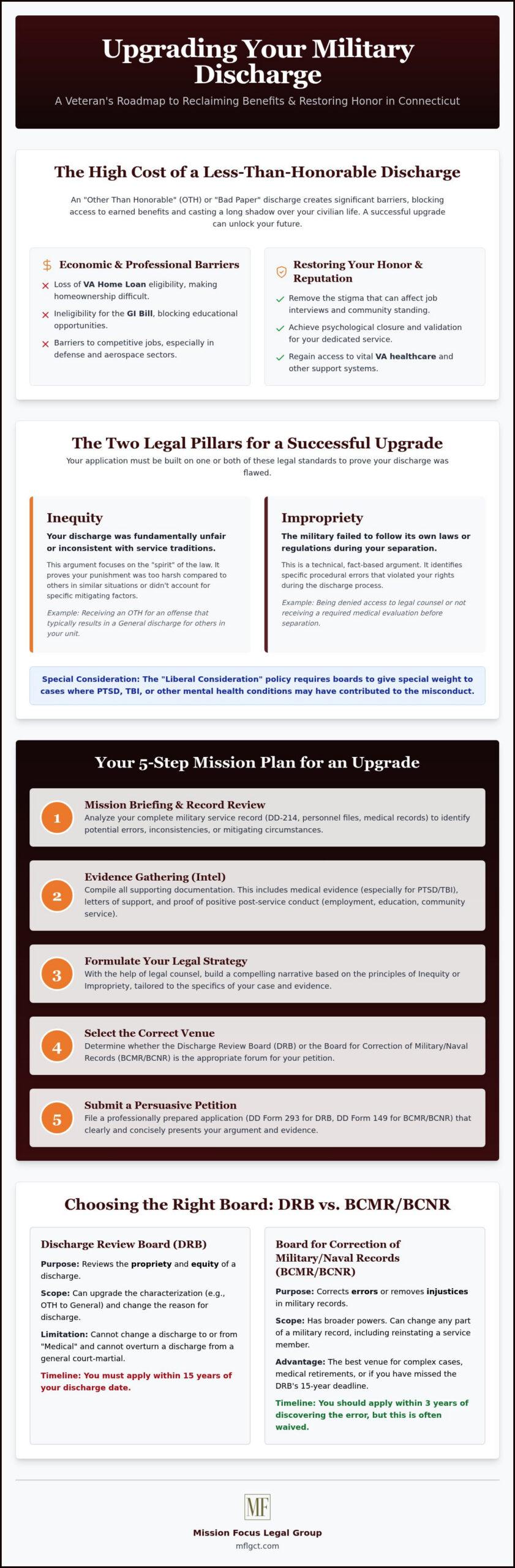
Inequity refers to a discharge that’s inconsistent with the traditions of the service or simply unfair. For instance, if you received an Other Than Honorable discharge for an offense that typically results in a General discharge for others in your unit, that’s an inequity. It focuses on the “spirit” of the law and the concept of fairness. Impropriety, on the other hand, is a technical failure. It occurs when the military didn’t follow its own regulations or the law during your separation. This might include procedural errors, such as failing to provide a required medical evaluation or denying you access to legal counsel. Most successful Connecticut cases utilize a combination of both standards to create an undeniable narrative of injustice. Using the Discharge Upgrade Application Tool can help you identify which path applies to your record, but a lawyer’s eye is needed to frame the argument effectively.
Liberal Consideration: PTSD, TBI, and MST
The legal landscape changed significantly with the issuance of the Hagel, Carson, and Kurta Memos. These directives established the “Liberal Consideration” policy, which forced discharge boards to view misconduct through the lens of mental health. If your behavior was a symptom of Post-Traumatic Stress Disorder (PTSD), Traumatic Brain Injury (TBI), or Military Sexual Trauma (MST), the board must give your evidence “great weight.” Liberal Consideration is the legal requirement for boards to favor veterans with service-connected trauma when determining if a discharge should be upgraded. It acknowledges that many “bad paper” discharges were actually undiagnosed medical crises rather than intentional misconduct. If you’re struggling with these issues, a skilled military law defense attorney can help you present the medical and service evidence the board needs to see. This policy has turned the tide for modern veterans, ensuring that those who served with invisible wounds aren’t permanently branded by the symptoms of their trauma.

Call For A Consultation
(860) 333-6455Navigating the Boards: DRB vs. BCMR/BCNR
The path to reclaiming your honor is a procedural battlefield. Choosing the right venue for your petition isn’t just a clerical task; it’s a high-stakes tactical decision. Veterans in Connecticut generally have two primary options: the Discharge Review Board (DRB) or the Board for Correction of Military/Naval Records (BCMR/BCNR). Understanding the operational differences between these bodies is essential for a successful outcome. A seasoned military discharge upgrade lawyer CT provides the JAG-level insight needed to determine which board offers the highest probability of victory for your specific service record. Timing and venue selection are the two most critical factors in this mission.
The Discharge Review Board (DRB) Process
The DRB is your first line of defense. Each service branch maintains its own board, including the Army, Navy/USMC, Air Force, and Coast Guard. You must file your application within 15 years of your discharge date. The DRB has the authority to change both the characterization of your service and the narrative reason for your discharge. You can choose between two hearing types:
- Record Review: A board of officers reviews your written application and military file without you present. This is typically a faster process but lacks a personal element.
- Personal Appearance: You and your counsel appear before the board to present testimony and evidence in person. This allows for a more dynamic presentation of your case.
While a paper review is faster, a personal appearance hearing often yields better results. It allows your advocate to humanize your service and address board member concerns in real-time. This face-to-face interaction is often the difference between a denial and a restored reputation.
The Board for Correction of Military Records (BCMR)
The BCMR serves as the “Supreme Court” for military records. If your discharge happened more than 15 years ago, the DRB no longer has jurisdiction, and you must petition the BCMR instead. While there’s a technical three-year statute of limitations for filing after discovering an error, these boards frequently grant “Interest of Justice” waivers. This is especially true for modern veterans dealing with service-connected trauma like PTSD or TBI. For Navy and Marine Corps veterans near Groton, the BCNR is the specific venue for these high-level corrections. The BCMR has broader powers than the DRB, including the ability to change reenlistment codes and correct administrative errors that lower boards cannot touch. Because decisions here can take 12 to 24 months, your initial filing must be disciplined, thorough, and strategically sound from day one.
The 5-Step Mission Plan for an Upgrade in Connecticut
Achieving a discharge upgrade is a strategic operation that requires meticulous preparation. It’s not enough to simply ask for mercy or express regret; you must present an evidence-based case that proves your current status is an error or a fundamental injustice. A military discharge upgrade lawyer CT approaches this process with the same tactical precision used in military planning. By following this five-step mission plan, you transform a vague hope into a formidable legal petition that demands a response from the board. This isn’t just about changing a word on a form; it’s about building an undeniable record of your service and character.
Gathering Your ‘Mission Intelligence’
Step one is securing your complete Official Military Personnel File (OMPF). You can’t fight what you can’t see. Requesting these records from the National Personnel Records Center (NPRC) is essential to identify the exact documents the board will review during their deliberation. If your service involved medical treatment or undiagnosed trauma, you must also secure your medical records from the West Haven VA. This facility is a vital resource for veterans in our local community to obtain the ground truth regarding their mental health at the time of separation. Additionally, you should identify and track down “Buddy Statements” from former unit members. These first-hand accounts provide vital context that dry administrative files often miss, helping to humanize the circumstances of your discharge for the board members.
Building Your Connecticut Support Network
Step two shifts the focus to your life after service. Boards want to see that you’ve been a productive, law-abiding member of the Connecticut community since leaving the military. Character references from local employers in Mystic or Norwich, or clergy members in Branford, carry significant weight in proving your post-service conduct. You should also obtain a background check through the Connecticut State Police to demonstrate a clean record since your discharge.
Step three involves obtaining a forensic medical nexus letter if mental health played a role in your separation. This professional opinion links your current diagnosis to specific events during your service. Step four is drafting a disciplined legal brief. This isn’t just a personal statement; it’s a structured argument that cites specific regulations and case law to justify the upgrade. Finally, step five is filing the DD Form 293 or DD Form 149 with strategic precision, ensuring every piece of evidence is indexed and cross-referenced. Restoring your status often opens doors to higher education. If you’re looking to utilize these benefits, a specialist Education Law Attorney Connecticut can help you navigate student rights once your GI Bill is restored. To start building your case today, contact our military law defense team for a focused strategy session.
Why a Former JAG Officer is Your Best Ally
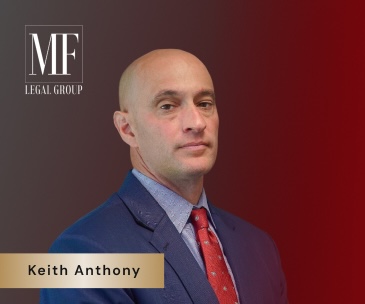
Navigating the Pentagon’s bureaucracy requires a specific set of skills that most civilian attorneys simply don’t possess. While many lawyers handle a broad range of cases, a military discharge upgrade lawyer CT with JAG experience brings a unique tactical advantage to your petition. Attorney Keith Anthony, a USMCR Major and former Judge Advocate, understands the “Commander’s mindset” because he has operated within it. This inside perspective is vital. It allows him to anticipate how board members will view your service record and build a narrative that aligns with military values while demanding a legal correction. When your reputation is on the line, you need an ally who speaks the language of the boards and understands the internal pressures they face.
Choosing a dedicated military defense attorney means your case isn’t just another file in a cabinet; it’s a mission that requires disciplined execution. General practice lawyers often struggle with the specific standards of proof and the specialized vocabulary required by the Discharge Review Boards. They might understand the law, but they don’t understand the culture or the precise procedural hurdles unique to military justice. By focusing on these high-stakes cases for over 10 years, our firm has developed a methodical rhythm that moves with controlled momentum toward results. We understand that for veterans in Groton, New Haven, and across Connecticut, this process is about reclaiming a life of honor and accessing the benefits earned through sacrifice.
Strategic Advocacy: The Mission Focus Approach
The Mission Focus approach treats every discharge upgrade as a high-stakes tactical operation. We don’t just fill out forms and wait for a response. We conduct a thorough reconnaissance of your military record to identify the specific inequities or improprieties that justify an upgrade. This involves an unflinching defense against the bureaucratic inertia that often stalls these cases for years. Whether we’re gathering buddy statements or drafting a complex legal brief, our work is characterized by a balance of direct, high-impact declarations and thorough evidence. We provide clear, mission-oriented communication throughout your case, ensuring you’re never left wondering about the status of your “clean slate” petition.
Taking the First Step Toward Your Upgrade
When you schedule your initial consultation, you’ll receive a professional and honest assessment of your situation. We evaluate the “winnability” of your discharge case by analyzing the available evidence, the timeline of your separation, and current Department of Defense policies. We’re transparent about the strengths and weaknesses of your petition from day one. This steady, professional guidance is designed to move you from a state of vulnerability to a position of informed strength. We take the burden of the legal process off your shoulders, acting as a battle-tested ally in your fight for justice. Schedule your strategic military law consultation with Mission Focus Legal Group today.
Reclaiming the Honor You Earned
Your service record shouldn’t be defined by a single mistake or a misunderstanding of your mental health. We’ve explored how navigating the complexities of the DRB and BCMR requires a disciplined, evidence-based approach. Whether you’re seeking to unlock VA benefits or clear your name for a civilian career, the path forward is built on proven legal standards. Partnering with a military discharge upgrade lawyer CT is about more than filing paperwork; it’s a strategic move to restore your reputation and secure the future you deserve.
Led by USMCR Major Keith Anthony, Mission Focus Legal Group has been serving Connecticut veterans for over 10 years. We bring former Judge Advocate insight to every case, ensuring your petition is handled with the precision of a tactical operation. You don’t have to carry this burden alone. It’s time to move toward a clean slate with an advocate who understands your sacrifice and knows how to fight for your rights.
Secure Your Future: Consult with a Former JAG Attorney Today
Your honor matters, and your mission to reclaim it begins today.
Frequently Asked Questions
Can I upgrade my discharge if it was more than 15 years ago?
Yes, you can still seek an upgrade. While the Discharge Review Board has a strict 15-year statute of limitations, cases older than that are handled by the Board for Correction of Military or Naval Records. These boards have the authority to correct any military record to remove an injustice. Even if the standard three-year filing window for these boards has passed, they often waive the deadline in the interest of justice for Connecticut veterans.
How long does the military discharge upgrade process take in 2026?
The duration depends on which board reviews your case. In 2026, the Discharge Review Board typically issues decisions within 6 to 12 months. Cases sent to the Board for Correction of Military Records generally take longer, often between 12 to 24 months. Partnering with a military discharge upgrade lawyer CT ensures your application is complete and strategically sound from the start, which helps prevent administrative delays that could stall your mission.
Does a discharge upgrade automatically give me back my GI Bill?
Not necessarily. To access the GI Bill, you generally must achieve an “Honorable” characterization. If your status is upgraded to “General Under Honorable Conditions,” you may regain VA healthcare and state benefits like the property tax exemptions in New Haven, but education benefits usually require the higher Honorable status. We focus our advocacy on reaching the specific characterization level required to unlock the full spectrum of federal and state benefits you earned.
What is the ‘Liberal Consideration’ policy for PTSD and TBI?
Liberal Consideration is a Department of Defense mandate requiring boards to favor veterans whose misconduct was a symptom of mental health conditions. If you can show that PTSD, Traumatic Brain Injury, or Military Sexual Trauma contributed to the circumstances of your discharge, the board must give your evidence “great weight.” This policy is a powerful tool for correcting records that ignored the invisible wounds of service members across Groton and the surrounding communities.
Do I need to travel to Washington D.C. for my hearing?
Physical travel is rarely necessary in 2026. Most discharge upgrades are decided through a “record review,” where the board examines your written brief and evidence. If a personal appearance hearing is granted, many boards now utilize video conferencing or telephonic options. This allows veterans from Mystic to Westbrook to provide testimony and answer board questions from the comfort of their own homes while their legal counsel manages the procedural requirements of the hearing.
Can a lawyer help me if I was discharged for a positive drug test?
Yes, upgrades for drug-related separations are possible under specific conditions. We often argue that the incident was an isolated event in an otherwise exemplary career or that it was a symptom of undiagnosed service-connected trauma. A military discharge upgrade lawyer CT can help you gather evidence of post-service rehabilitation and community service in Connecticut. This evidence demonstrates that the original characterization is no longer an equitable reflection of your character or your service.
What are the chances of winning a discharge upgrade?
Success depends on the quality of your evidence and the strength of your legal argument. Petitions that include medical nexus letters, strong buddy statements, and a disciplined legal brief citing specific regulations have the best chance of survival. We evaluate every case for “winnability” by looking for procedural errors or clear inequities. While no outcome is ever guaranteed, a JAG-level review of your file ensures that every tactical advantage is utilized in your petition.
Is it worth hiring a private military lawyer CT instead of using a VSO?
While Veterans Service Organizations provide excellent free assistance for standard claims, a private attorney offers a different level of high-stakes advocacy. We provide the intensive legal research, brief-writing, and strategic planning that a JAG-trained professional brings to a complex case. At Mission Focus Legal Group, we apply military discipline to every file, ensuring your narrative is presented with the authority and precision required to overcome the bureaucratic inertia of the Pentagon.
Call For A Consultation
(860) 333-6455